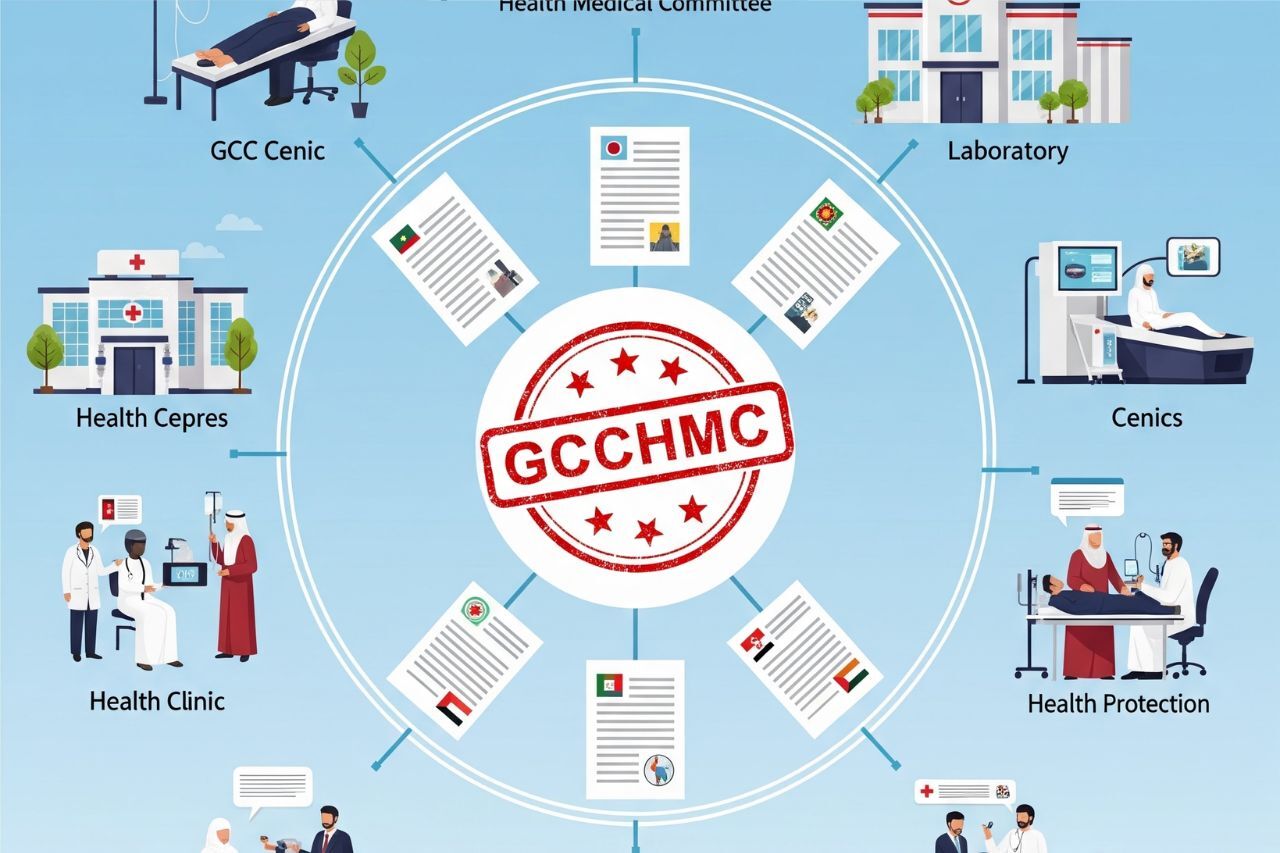
The Gulf Cooperation Council Health Medical Committee
(GCCHMC), often referred to as the Gulf Health Council (GHC)
more broadly, plays a central and indispensable role in the
entire GAMCA medical examination process.
Essentially, it acts as the governing and regulatory body
that ensures standardization, quality, and efficacy of
health screenings for expatriates seeking to work or reside
in GCC countries.
Here are the key roles and responsibilities of the GCCHMC in
the GAMCA process:
Setting Standards and Guidelines:
-
The GCCHMC defines the specific medical examinations,
laboratory tests (e.g., blood, urine, stool), and
imaging (e.g., chest X-ray) that are mandatory for all
applicants.
-
They establish the "fitness" criteria, determining which
medical conditions (infectious or chronic) would render
an applicant "unfit" for entry or employment.
-
They continuously review and update these standards
based on evolving public health needs and medical
advancements.
Accreditation and Oversight of Medical Centers:
-
A primary function is to approve and accredit medical
centres in various countries (origin countries of
expatriates) to conduct the GAMCA medical examinations.
Only these approved centres are authorized to perform
the tests and issue certificates that are recognized by
GCC nations.
-
They establish strict criteria for the accreditation of
these centres, ensuring they meet specific
infrastructure, equipment, and personnel qualifications.
-
The GCCHMC also has the authority to inspect, monitor,
and audit these accredited centers to ensure compliance
with their established guidelines and to maintain
quality control.
-
They can approve, revoke, or de-activate centres based
on performance and adherence to regulations.
Facilitating the Online System (WAFID):
-
The GCCHMC oversees the centralized online system, often
referred to as WAFID (formerly directly GAMCA online),
for booking medical appointments. This system assigns
applicants to specific approved medical centres,
ensuring a streamlined and transparent process.
-
They manage the electronic submission and tracking of
medical reports from the accredited centres to the
respective GCC immigration authorities.
Public Health Protection:
-
At its core, the GCCHMC's role is to safeguard the
public health of GCC citizens and residents. By
rigorously screening incoming expatriates for
communicable diseases (like TB, HIV, and Hepatitis) and
other conditions that could pose a health burden, they
act as a critical barrier against the importation and
spread of illnesses.
Policy Development and Implementation:
-
They are responsible for proposing and implementing
amendments to the rules, regulations, and conditions of
expatriate health check-ups.
-
They also form central and technical committees composed
of health experts from GCC member states to carry out
specific tasks, such as evaluating centres and studying
proposals for new accreditations.
Data Analysis and Reporting:
-
The GCCHMC collects, analyzes, and provides data and
statistics related to the expatriate health check-up
program. This data informs policy decisions and program
development.
-
They also report "unfit" cases to relevant medical
centres and authorities.
In essence, the GCCHMC is the cornerstone of the GAMCA
system, providing the necessary framework, oversight, and
operational tools to ensure that only medically fit
individuals are granted entry for work and residency in the
Gulf Cooperation Council countries.