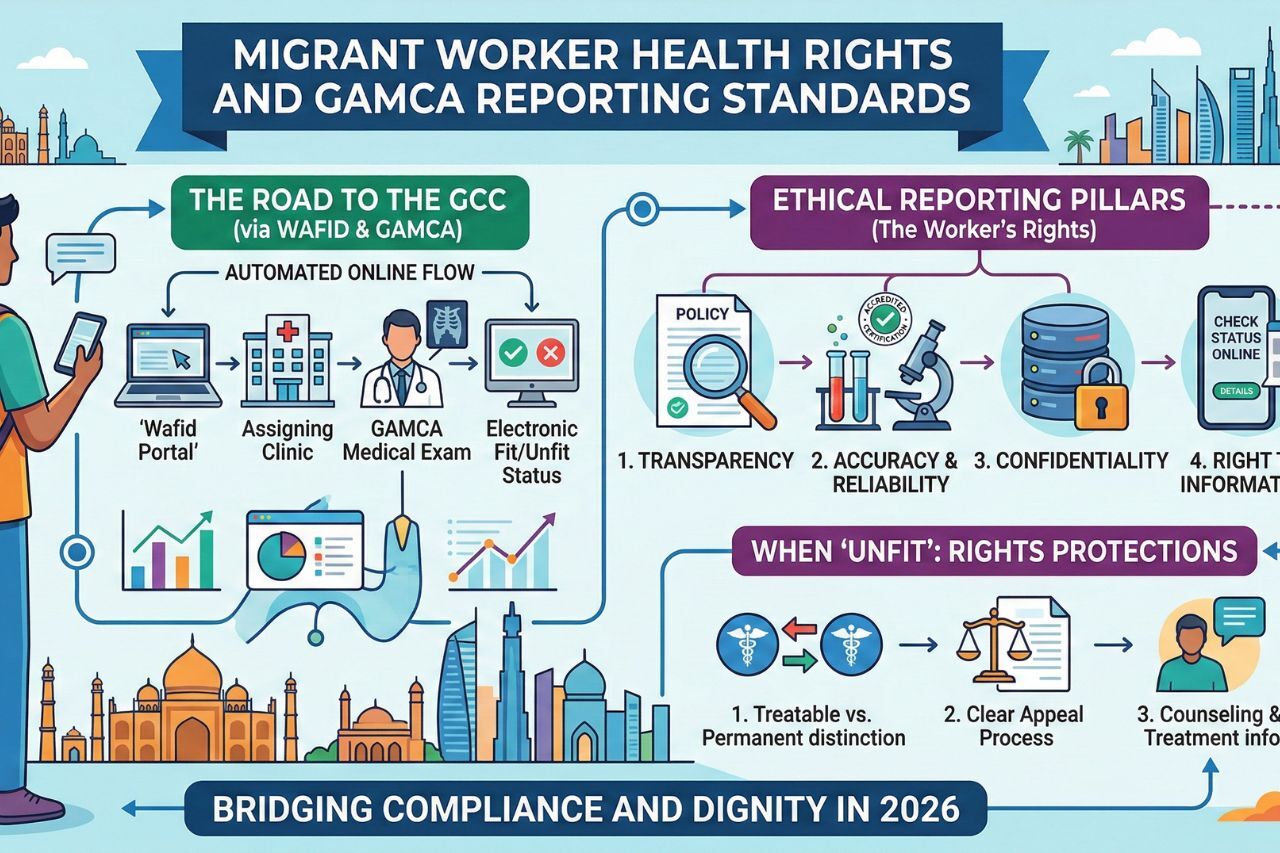
For many people from India heading to Gulf countries like
the UAE, Saudi Arabia, Qatar, Kuwait, Oman, or Bahrain for
work, the GAMCA medical examination is a key step. This
check-up helps confirm that workers are healthy enough to
live and work abroad safely. At the same time, it touches on
important aspects of migrant worker health rights, such as
fairness, privacy, and the chance to address any issues in
the results.
This post looks at how GAMCA reporting standards work
alongside the rights of migrant workers, especially those
from places like Kolkata and other parts of India. It covers
the basics, common concerns, and useful steps to take.
How GAMCA Reporting Works
The GAMCA system, now largely operating under the
WAFID digital platform, sets uniform rules
for medical checks on people going to GCC countries. The aim
is to make sure everyone is free from certain health risks
and able to handle job demands.
Main parts of the process include:
-
Comprehensive Screening: A full review
of your health history, a physical check, blood and
urine tests, chest X-ray, and sometimes other
assessments.
-
Binary Results: Results come as "Fit"
(cleared for visa) or "Unfit" (not approved). In 2026,
some cases may receive a "Temporary Unfit" status for
treatable conditions.
-
Centralized Digital System: Reports go
straight to a central system for quick checking by
embassies and immigration offices, helping keep things
consistent and reduce errors.
-
Validity: The certificate usually lasts
60–90 days, so timing matters for visa applications.
Health Rights for Migrant Workers in This Process
Workers have basic rights rooted in international ideas
about fair treatment and access to care. The GAMCA setup
tries to balance public health needs in Gulf countries with
respect for individuals.
Some key points include:
-
Informed Consent and Privacy: Testing
should happen with a clear understanding, and results
need to stay private. Digital systems in 2026 have
enhanced data protection to prevent unauthorized access.
-
No Unfair Treatment: Decisions about
being unfit should be based only on health factors that
truly affect safety or work ability. Treatable issues
might allow a second chance after care.
-
Options if Results are Unfit: For
fixable conditions like infections or controlled
diabetes, people can get treatment and try again later,
often after a mandatory 3 to 6-month waiting period.
-
Clear Communication: You should get
details on why a result is unfit to help decide next
steps. Modern centers are now required to provide more
transparent reasoning for rejections.
Common Challenges
Even with set rules, some issues come up:
-
Workers sometimes don't get full explanations for unfit
findings, making it harder to respond.
-
The process can feel strict, especially for
lower-skilled jobs where a negative result might mean
lost opportunities or added costs.
-
External factors like travel problems or regional
instability (as seen in early 2026) can delay things
further.
Practical Steps to Protect Your Rights
To go through the GAMCA process more smoothly:
-
Official Channels: Book only through
the official WAFID/GAMCA portal to stay away from fake
options.
-
Transparency: Be open about your health
history and bring any past records.
-
Request Reports: Ask for a copy of your
full report, especially if the outcome isn't what you
expected.
-
Seek Evidence: If needed, gather proof
from specialists and contact the embassy for guidance on
reviews or re-tests. In 2026, many centers now offer an
online appeal option for specific
cases.
-
Stay Updated: Keep track of updates
from trusted sources about any changes.
Wrapping Up
The GAMCA system helps keep health standards high for Gulf
migration, but it works best when paired with respect for
migrant rights. Clear rules, privacy, and fair chances to
fix issues make the experience better for everyone involved.