
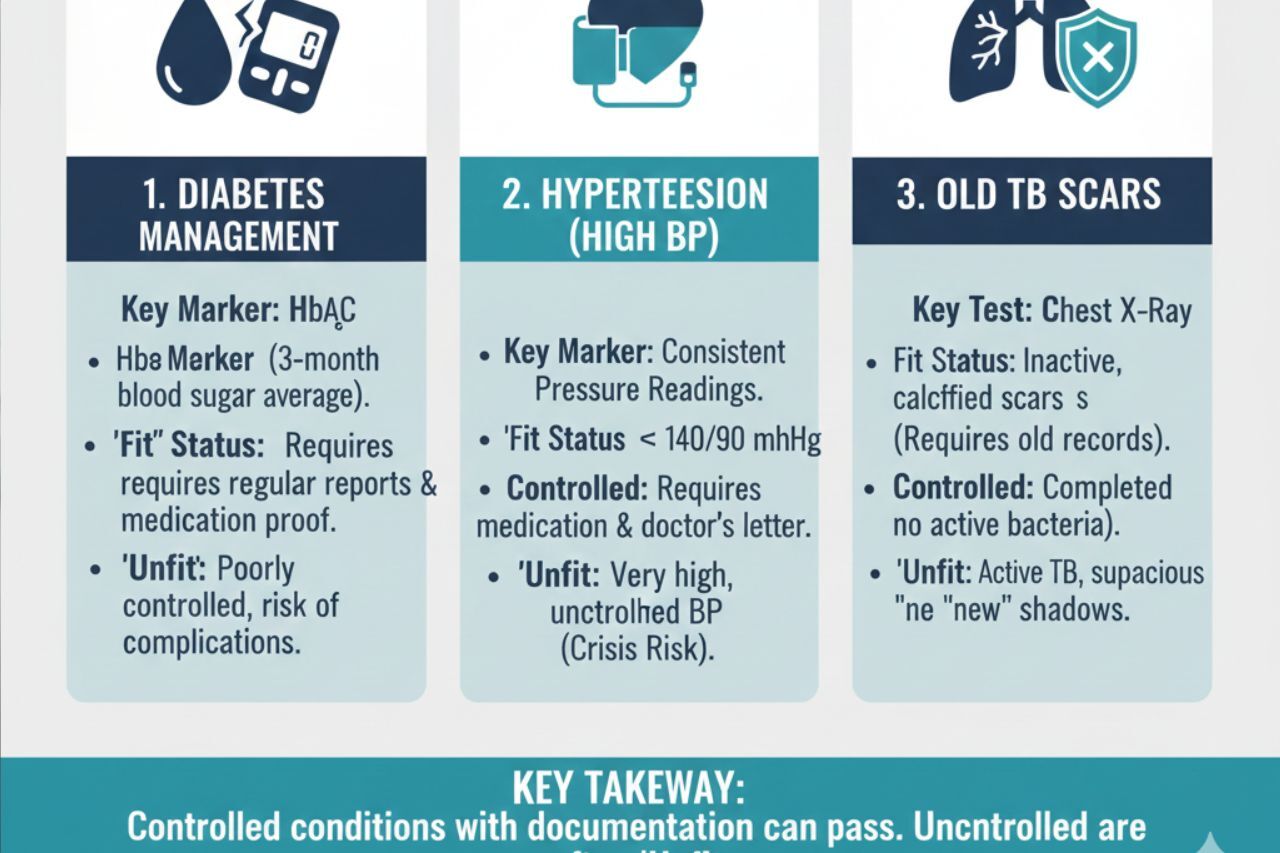
GAMCA (Gulf Approved Medical Centers Association) medical examinations are a mandatory requirement for individuals applying for employment visas to GCC countries. One of the most common concerns among applicants is how chronic medical conditions—such as diabetes, hypertension, asthma, or heart disease—are evaluated during the GAMCA medical process. Unlike routine health check-ups, GAMCA medical assessments are not focused on treatment or disease management but on medical fitness for employment and public safety.
This article explains how chronic conditions are evaluated under GAMCA medical standards, what factors influence fitness decisions, and what applicants should realistically expect.
Purpose of Evaluating Chronic Conditions Under GAMCA
GCC countries require GAMCA medical screening to ensure that
incoming workers:
Do not pose a public health risk
Are physically and mentally capable of performing their job
roles
Are unlikely to place an excessive burden on healthcare
systems
Can work safely in demanding environments
Chronic conditions are therefore evaluated based on risk,
stability, and functional impact, not merely on diagnosis.
General Approach to Chronic Conditions
Under GAMCA medical standards, chronic illnesses are
assessed using three key criteria:
Severity of the condition
Level of control or stability
Impact on job performance and safety
A chronic condition does not automatically result in
unfitness. However, uncontrolled, progressive, or high-risk
conditions are more likely to lead to rejection.
Evaluation of Common Chronic Conditions
Diabetes Mellitus
Diabetes is one of the most frequently evaluated chronic
conditions under GAMCA.
Assessment factors include:
Blood sugar levels at the time of examination
Evidence of complications (neuropathy, kidney disease,
vision problems)
Dependence on insulin for control
Applicants with well-controlled diabetes and no
complications may be considered fit for certain job
categories. However, uncontrolled diabetes or diabetes with
complications often results in unfitness, especially for
physically demanding or safety-sensitive roles.
Hypertension (High Blood Pressure)
Hypertension is assessed based on:
Current blood pressure readings
Response to medication
Evidence of organ damage
Mild, controlled hypertension may be acceptable for low-risk
jobs. However, uncontrolled or severe hypertension can lead
to unfitness due to the risk of cardiac events, particularly
in high-stress or manual labor roles.
Asthma and Respiratory Conditions
Respiratory conditions are evaluated with particular
caution.
Key considerations include:
Frequency and severity of symptoms
Need for regular medication or inhalers
History of hospitalizations
Applicants with mild, well-managed asthma may be approved
for certain roles, while those with frequent attacks or
limited lung function are often declared unfit, especially
for dusty, industrial, or outdoor jobs.
Cardiac Conditions
Heart-related conditions are among the most strictly
evaluated under GAMCA standards.
Assessment focuses on:
History of heart disease or surgery
Abnormal ECG findings
Risk of sudden cardiac events
Even controlled cardiac conditions may result in unfitness
if the job involves physical exertion, heat exposure, or
long working hours.
Kidney and Liver Disorders
Chronic kidney or liver conditions are evaluated through
blood and urine tests.
Factors leading to unfitness include:
Abnormal kidney function markers
Evidence of chronic liver disease
Risk of progression requiring long-term treatment
These conditions are often considered incompatible with
overseas employment due to potential medical emergencies and
treatment needs.
Musculoskeletal Disorders
Chronic back pain, joint disorders, or mobility limitations
are assessed based on functional ability.
Applicants may be declared unfit if the condition:
Limits physical movement
Increases the risk of workplace injury
Conflicts with the physical demands of the job
This is especially relevant for construction and industrial
roles.
Importance of Job Category in Fitness Decisions
GAMCA medical outcomes are closely tied to the job title and
job risk level. A condition that may be acceptable for an
office-based role could result in rejection for:
Construction workers
Drivers
Machine operators
Security personnel
Accurate job classification during registration is critical
to fair evaluation.
Disclosure and Medical Documentation
Applicants are expected to disclose known chronic conditions
honestly. Non-disclosure can result in:
Additional investigations
Permanent unfitness if discovered later
Loss of trust in future applications
While GAMCA does not typically allow personal medical
reports to override findings, truthful disclosure helps
prevent allegations of misrepresentation.
Limited Scope for Re-Test or Appeal
For chronic conditions:
Re-tests are generally limited
Appeals are rarely successful unless initial findings were
incorrect
Medical decisions prioritize long-term risk over short-term
stability
Applicants should be cautious of agents claiming guaranteed
clearance for chronic illnesses.
Conclusion
Under GAMCA medical standards, chronic conditions are
evaluated based on control, severity, and occupational risk,
not personal comfort or treatment availability. While some
well-managed conditions may be acceptable for low-risk
roles, uncontrolled or high-risk chronic illnesses often
result in unfitness due to safety and public health
considerations.
Applicants with chronic conditions should approach the GAMCA
medical process with realistic expectations, honest
disclosure, and an understanding that medical fitness
decisions are regulatory, not negotiable. Compliance and
transparency remain the safest path for long-term overseas
employment eligibility.